
2026-08-13
Europe’s Rivers Are Running Low. Supply Chain Risks Are Running High.
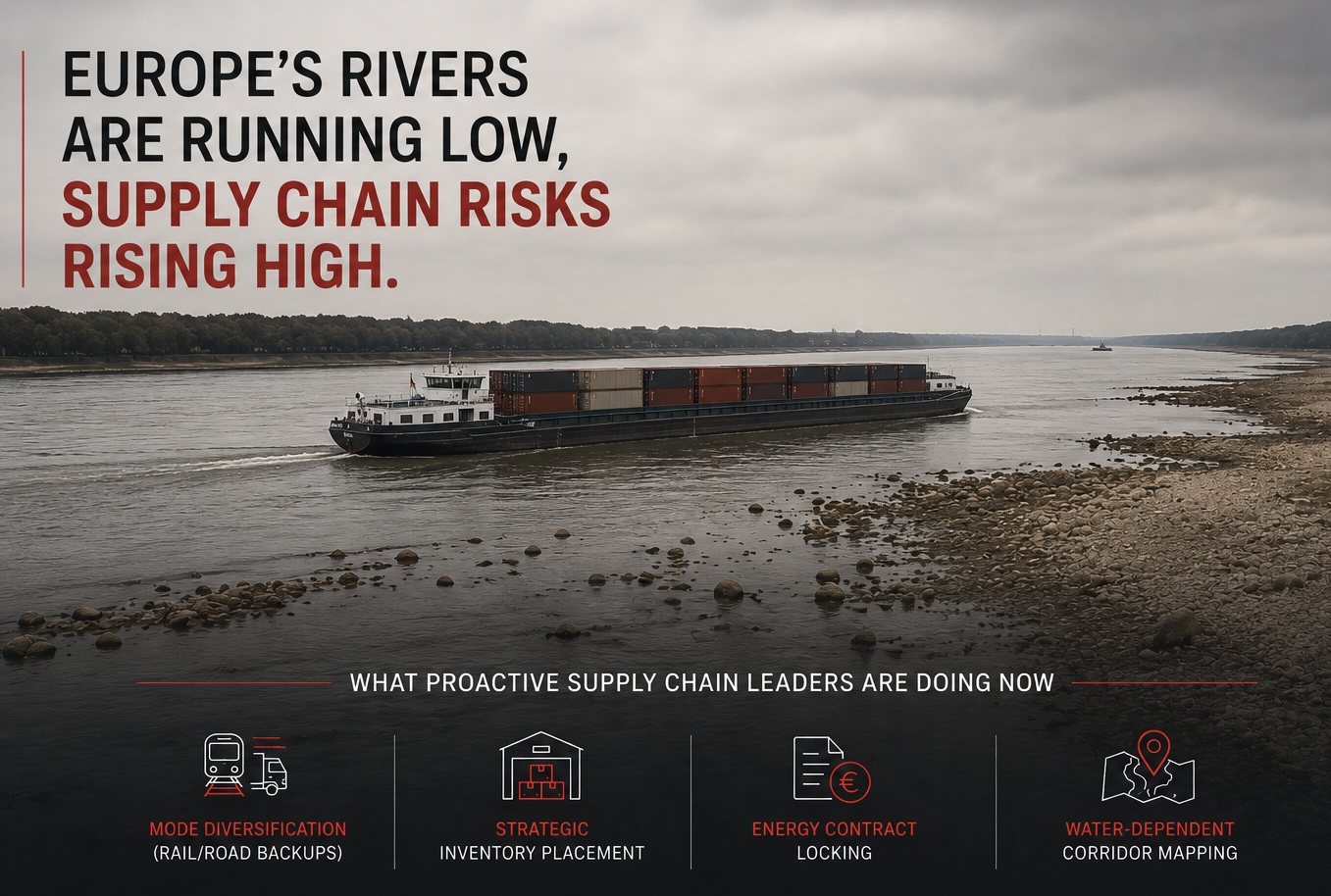
As water levels fall across major European rivers, cargo vessels are being forced to operate with reduced loads. Less cargo per vessel means tighter transport capacity, higher logistics costs and greater pressure on companies dependent on inland waterways.
But logistics is only the first hit.
Lower river flows can also restrict the cooling water available to power plants, tightening electricity supply when demand is already high. Rising energy costs then feed directly into manufacturing costs.
One disruption. Multiple consequences.
For Procurement and Supply Chain leaders, climate volatility is becoming another recurring risk to manage alongside geopolitics, energy prices and raw material volatility.
So what can companies do now?
Diversify transport modes: Build rail and road alternatives for critical inland-waterway routes.
Position strategic inventory: Create buffers around climate-sensitive routes before capacity becomes constrained.
Secure energy contracts: Reduce exposure to seasonal price spikes by acting before demand peaks.
Map water-dependent corridors: Identify critical suppliers, production sites and logistics flows exposed to low water levels.
The objective isn’t to predict the next disruption.
It’s to make sure you have options when it arrives.