
2026-07-08
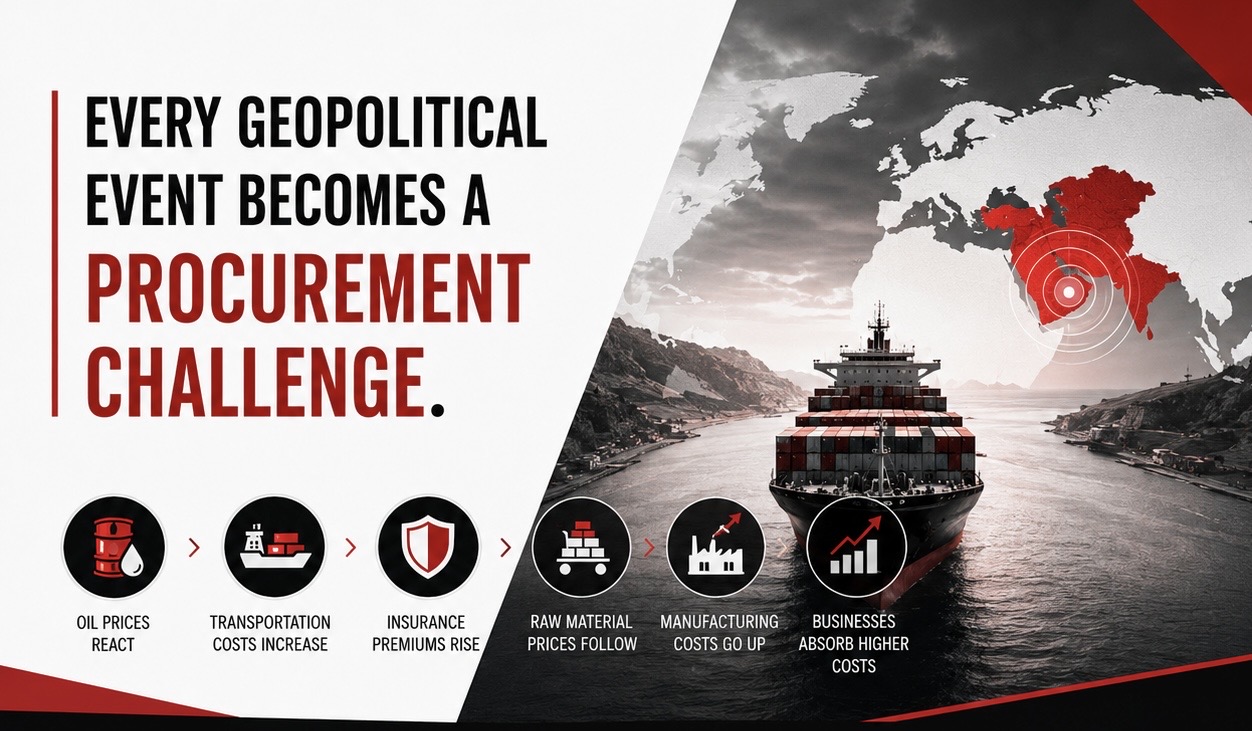
Every Geopolitical Crisis Eventually Becomes a Procurement Challenge
Procurement brings market intelligence, supply market insights, visibility into transportation options, supplier innovation, production improvements, and long-term risk management.
As I mentioned in one of my previous articles, procurement has earned an important seat at the executive table. Not because organizations suddenly value procurement more, but because uncertainty has become a permanent part of doing business.
Recent geopolitical tensions reminded us of one important reality.
A single waterway can change the price of almost everything.
Oil prices
Transportation costs
Insurance premiums
Raw material prices
Manufacturing costs
Eventually…
Businesses absorb higher costs.
Many organizations respond by switching suppliers in search of lower prices or faster deliveries.
But that approach often solves today’s problem while creating tomorrow’s.
One of the projects I’m most proud of addressed exactly this challenge.
Instead of chasing the lowest quarterly price from different suppliers across multiple regions, we chose a different approach.
We partnered with a strategic supplier using an open-book costing model, developed joint 1-, 3-, and 5-year efficiency roadmaps, and implemented consignment stock.
The objective wasn’t simply to negotiate a lower price.
It was to create long-term transparency, improve resilience, and generate sustainable value for both sides.
Because when uncertainty increases, procurement is no longer about buyers and suppliers.
It’s about partners solving problems together.
Long-term resilience can only be achieved when both sides benefit.
The result?
A more resilient supply chain
Transparent cost management
Continuous efficiency improvements
The companies that will outperform during the next geopolitical disruption won’t necessarily be the ones with the lowest purchasing prices or the highest inventory levels.
They’ll be the ones that invested in trust, transparency, strategic partnerships, and long-term collaboration long before the disruption occurred.
Because in today’s world, procurement is no longer just managing suppliers.
It is managing uncertainty.